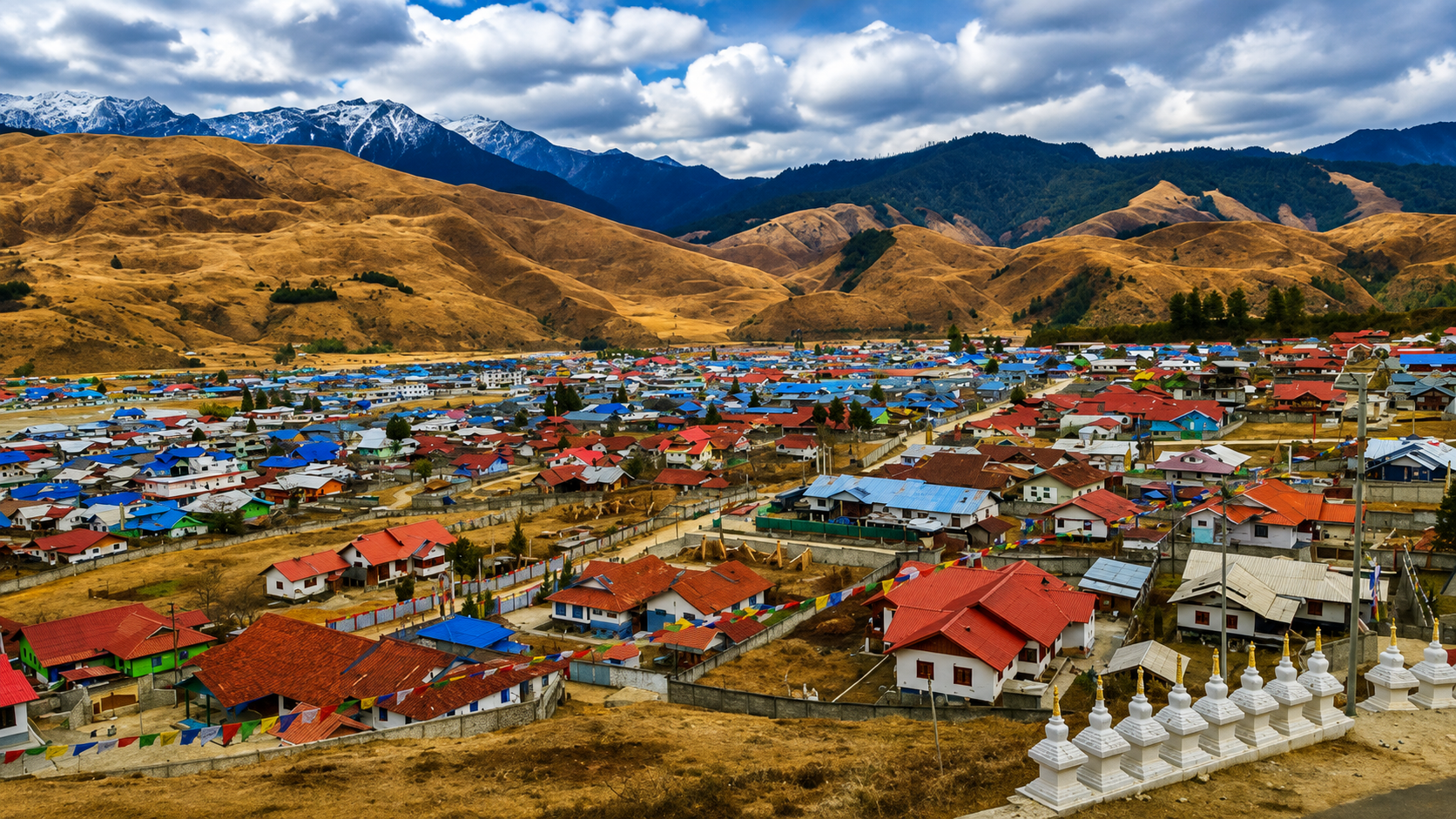
You do not leave India. You cross a painted barrier, hand a printed page to a man in uniform, and step into a different idea of who belongs where.
The road climbs into the hills and stops at the barrier: a pole across the tarmac, a small office beside it, a register open on the desk. He looks at your permit, checks your name against it, and lifts the pole. You have just crossed the Inner Line.
It is a strange thing to need a permit to enter part of your own country, and stranger still that most of what is written about this one is wrong. Foreign travellers are told they need it and do not; Indian travellers assume a single permit covers the whole Northeast, and it does not.
But the permit makes sense the moment you understand what the line is. The Inner Line is not a border. It is a community's front door - and the permit is simply how you knock. Learn what it protects, and the checkpoint stops being paperwork and becomes something you are glad to observe.
The line, and why it's there
The line is old. In 1873, the British drew an "Inner Line" across their eastern frontier under the Bengal Eastern Frontier Regulation and forbade outsiders to cross it without a permit. The motive was money: to keep private traders out of the hills where the Crown wanted the tea, timber and oil for itself.
Independent India kept the line and quietly reversed its purpose. The same boundary that once guarded colonial profit now guards something else entirely - the land, and the distinct cultures, of the Indigenous communities who live beyond it. The permit that once served an empire now serves the people that empire fenced in.
That protection is not symbolic. Areas inside the Inner Line are exempted from the Citizenship Amendment Act, which is precisely why Manipur pressed to join the system as recently as 2019. The permit you carry is the visible edge of a living rights framework, not a colonial relic.
A line drawn to guard an empire's profit now helps a people guard themselves.
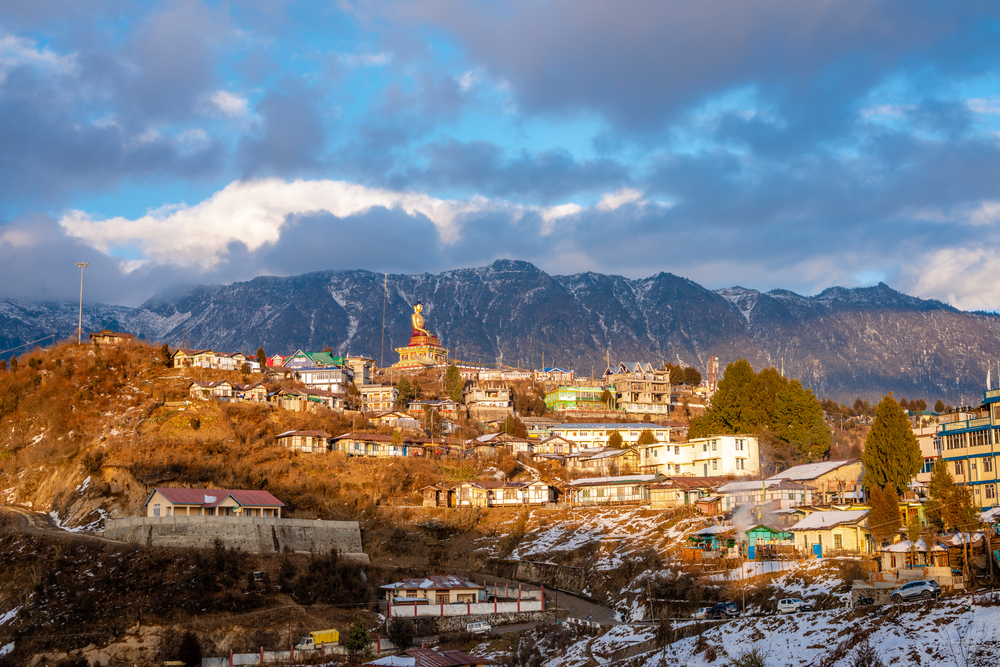
Who needs what
Here is the distinction that trips almost everyone. The Inner Line Permit - the ILP - is for Indian citizens. If you hold an Indian passport, it is the document that lets you enter and stay in a protected state for a set number of days.
If you hold a foreign passport, the ILP is the wrong word altogether. Foreign nationals travel under a separate regime - the Protected and Restricted Area permits, and registration with the Foreigners Regional Registration Office, the FRRO - and that regime tightened in December 2024, when several Northeastern states were brought back under it. So a foreign traveller and their Indian friend, on the same trip, need two different permissions from two different systems. Confusing one for the other is the classic, trip-blocking mistake.
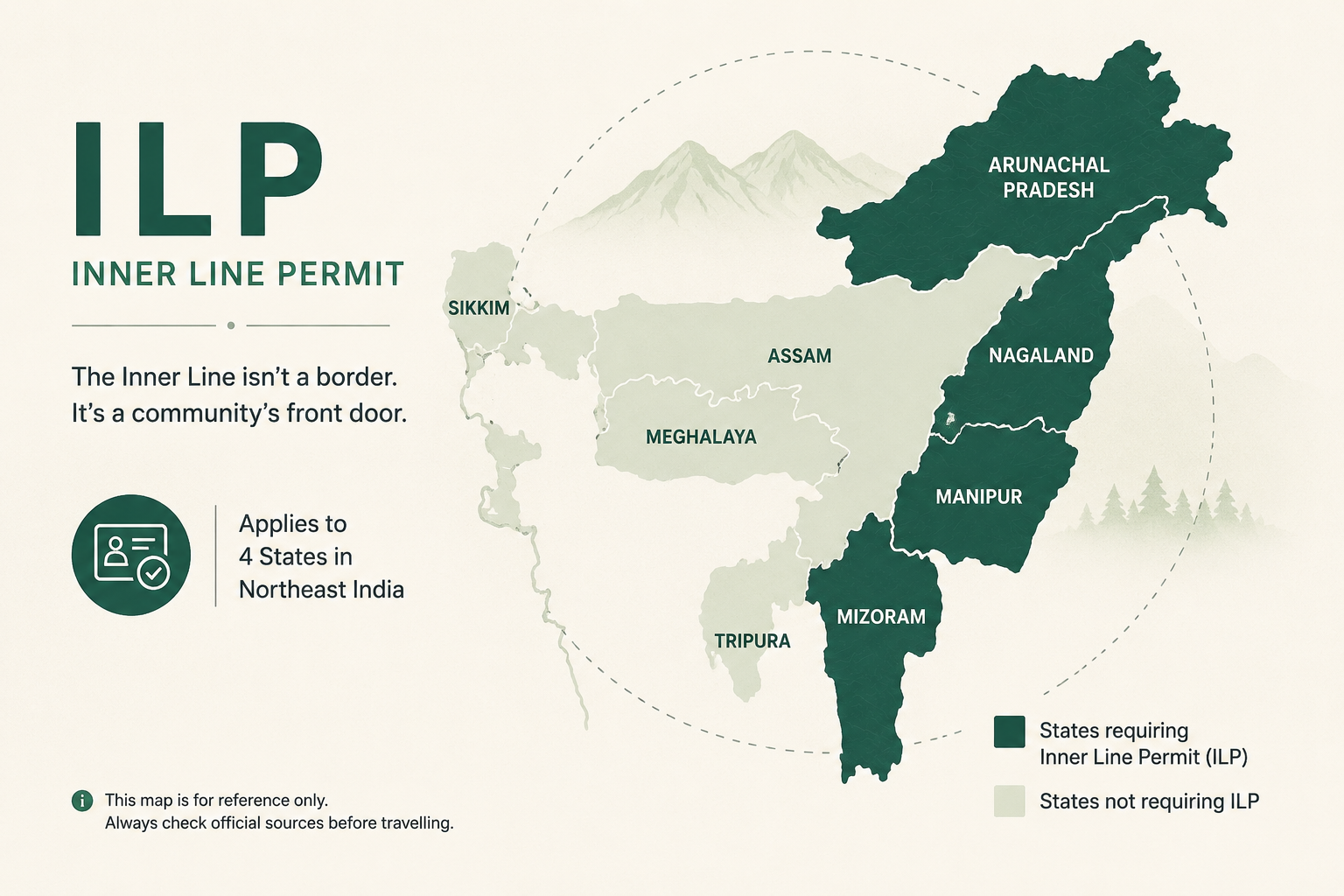
And it is only four states. The ILP applies to Arunachal Pradesh, Nagaland, Mizoram and Manipur - the last of which joined only at the end of 2019. The rest of the Northeast - Assam, Meghalaya, Tripura, Sikkim - asks for no ILP at all. "The Northeast" is not one permit; it is a patchwork, and knowing which square you are stepping into is half the work.
Getting your permit
For an Indian citizen, the process is usually simple. Arunachal, Nagaland and Manipur each run their own official online ILP portal, where you upload a photo and an ID, choose your dates, pay a small fee and download the permit. Mizoram is the outlier: its permit is more often issued on arrival - at Aizawl's Lengpui airport or a land checkpost - or through a Mizoram House liaison office in Delhi, Kolkata or Guwahati. That old liaison-office route, in fact, still works for every state as a fallback.
However you get it, carry a printed copy. The permit is checked at entry checkposts and sometimes again on the way out, and a phone with no signal in the hills will not save you. Tourist permits typically run about fifteen to thirty days and can usually be extended; the fee is nominal.
Then the honest friction, because a guide that pretends there is none is no use. The government portals go down or slow to a crawl, so leave a buffer and keep the on-arrival option in mind. Each state sets its own rules and validity, so do not assume one transfers to the next. Areas close to the international borders - with Myanmar, China and Bangladesh - carry extra restrictions even with a permit in hand. And the rules change: the December 2024 tightening for foreigners is live proof that this is a moving target. Check the official state or Home Ministry source close to your trip, not a travel blog from three years ago.
If you visit
- Who needs it
- Indian citizens entering Arunachal Pradesh, Nagaland, Mizoram or Manipur. Foreign nationals do not use the ILP; they travel under the Protected and Restricted Area regime and register with the FRRO (the rules tightened in December 2024).
- How to apply
- Online through each state's official government ILP portal (Arunachal, Nagaland and Manipur), or on arrival at the airport and checkposts, or through a state Bhavan office in Delhi, Kolkata or Guwahati (the usual route for Mizoram). Carry a printed copy.
- Validity
- Tourist permits typically run about 15 to 30 days and are extendable; the fee is nominal. Confirm the current figure on the state portal.
- Good to know
- Only four states need an ILP; Assam, Meghalaya, Tripura and Sikkim do not. Areas near the international borders carry extra restrictions, and the rules change - verify close to your trip.
Back at the barrier in the hills, the pole lifts and you drive on into the state beyond. It is worth a moment's thought at that line. You are not being processed; you are being admitted - into a homeland whose people have kept, across a century and a half, the right to decide the terms on which outsiders enter.
Carry the permit, then, not as a hoop to jump through but as the small courtesy it is. The Inner Line asks only that you arrive knowing whose door you are opening.