It is dawn at the gate. A line of open jeeps idles in the cold, headlamps on, everyone quiet, everyone hoping for the same thing. Somewhere in the forest ahead there is a tiger, or there isn't, and in the next three hours you will find out.
But most of what decides how this morning goes was settled weeks ago, at a keyboard: which zone you booked, which season you came in, and whether the website you paid was real. A tiger reserve looks like a matter of luck. It is mostly a matter of reading.
Because a reserve is not a zoo with better odds. It is a system, with a map, a calendar, a door and a set of manners - and the traveller who learns to read those four sees more, wastes less, gets cheated less, and treads more lightly than the one who simply chases the tiger. Here is how to read one.
Read the map: core and buffer
A tiger reserve is two things, not one. Under Project Tiger, each reserve is a strictly protected core - the critical habitat where tourism is confined to a small slice on fixed routes - wrapped in a buffer, a ring of forest and lived-in land where people and wildlife share the ground.
Most visitors ask for the core and treat the buffer as second-best. That is a mistake. Tigers are territorial and spill out into the buffers; buffer safaris are often less crowded and, increasingly, just as productive. They also matter more. Buffer tourism puts money directly into the hands of the people who live alongside tigers - which is the whole logic of conservation, a tiger worth more to a village alive than dead. And when the core closes for the monsoon, the buffer is frequently the only legal way in. Ask what zones a park offers, and do not turn your nose up at the buffer.
Read the calendar
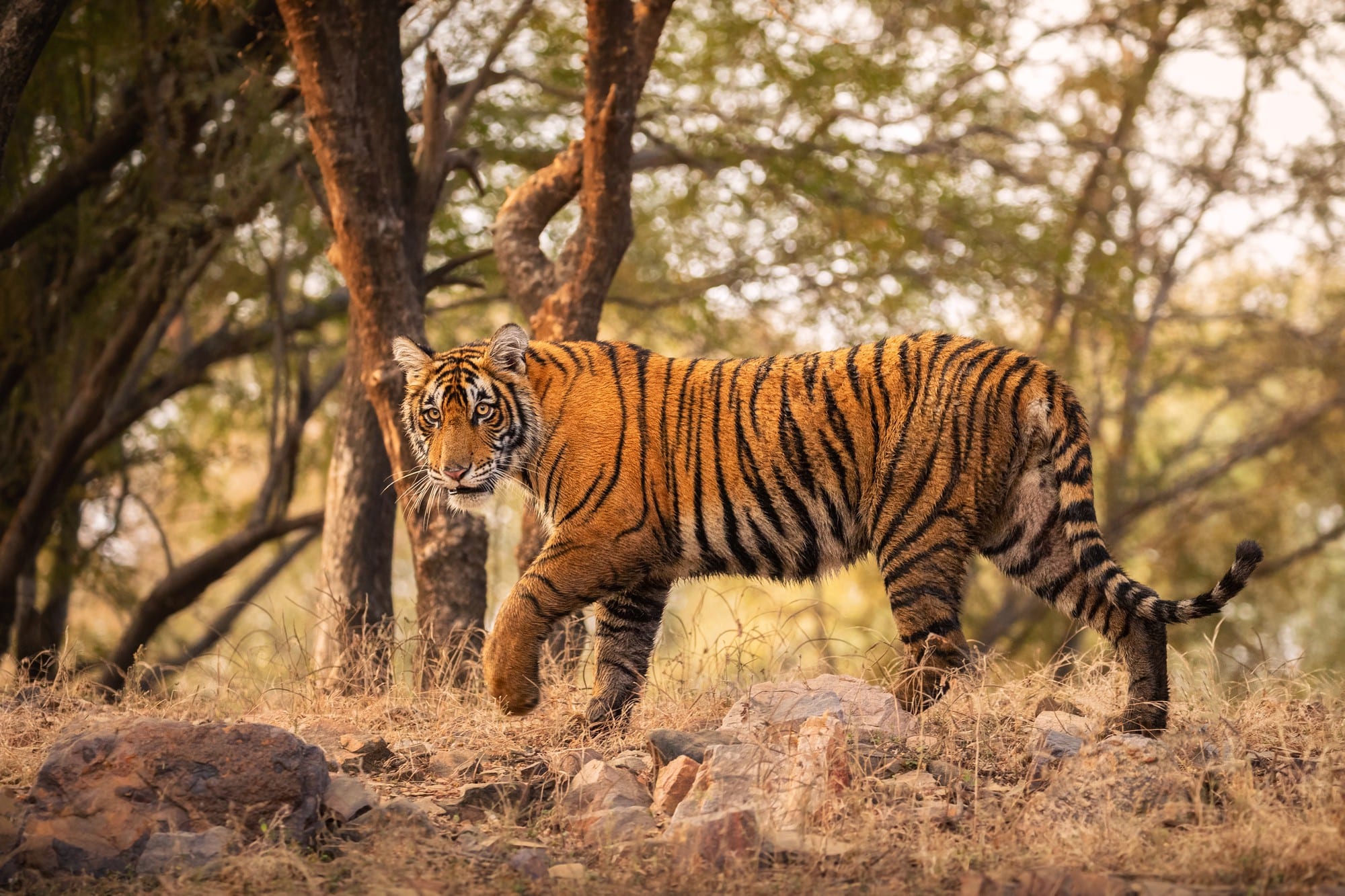
Reserves keep the monsoon to themselves. Across central India, the core zones typically close around the start of July and reopen about the first of October, once the tracks have dried - though the exact date moves with the rains and the forest department's orders, and some parks reopen in phases. Buffers often stay open year-round, and a few reserves keep their own calendar entirely: parts of Corbett run all year, and Kaziranga, up on Assam's floodplain, works to a roughly November-to-April season. Always check the specific park's current dates rather than trusting a general rule.
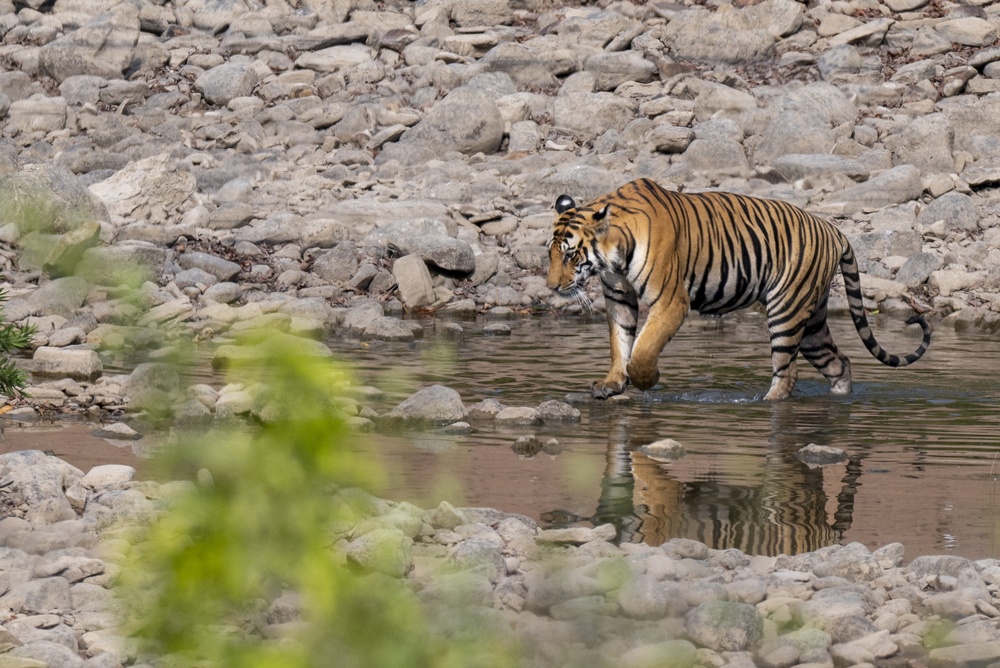
Picture the reserve in May. The grass is burnt to straw, the trees are bare, and the heat presses down on everything. By late afternoon a tigress pads down to the last waterhole that has not dried - the one cool thing for miles - and lies in it, chin on the mud, while the deer wait at a nervous distance for their turn. That is the whole reason the hot months are the season for sightings: when the water shrinks to a few pools, the forest is forced into the open.
It is also why they are the hardest months to travel. April to June can climb past forty-five degrees, and the forest is dust. October to March is the opposite bargain - green, comfortable and beautiful, but the sightings are harder, because water and shade are everywhere and a tiger has no reason to show itself. There is no best time, only the trade you would rather make.
And one line belongs under all of it: a sighting is never guaranteed. A reserve is wild habitat, not an enclosure, and the finest parks blank on good days. Anyone who promises you a tiger is selling something - and often the thing they are selling is the scam.
A tiger reserve rewards the reader, not the lucky.
Read the door: booking, and the scams
This is where trips are actually lost. Safari permits are limited - a fixed number of vehicles per zone per slot, morning and afternoon - and they sell out. A genuine permit is booked against a government photo ID; the travellers' names go on the permit, and they are checked at the gate. That last detail matters, because it is exactly why a stranger's "guaranteed slot" is worthless if it is not in your name.
Around that real system has grown an industry of fakes. Lookalike "official booking" websites - polished, high in the search results, some with the letters "gov" wedged into an address where they do not belong - take travellers' money for permits that do not exist. So learn the door. Trust only the state forest department's own website, and know what that looks like: a genuine one sits on a .gov.in address (or the state's official government domain), never a .com or .org dressed up to seem official. Start from the forest department's homepage and follow its booking link, rather than trusting a search result or an advertisement that drops you straight onto a payment page.
And hold on to the honest difference between a scam and a service. A reputable lodge or agent booking a real permit in your name, through the government system, for a fee, is completely normal and often the easiest way to go. A website impersonating the government and pocketing your money for nothing is the fraud. If in doubt, the only thing that counts is a genuine permit, in your name, on the government's own portal.
Read the room: manners
The last thing to read is how to behave once you are inside, because the way tourists watch tigers has begun to harm them. Researchers have found that tigers living near busy tourist tracks carry higher stress hormones than those in quiet forest; heavy jeep pressure can push a tigress to move her cubs; and a single sighting can collapse into a scrum of thirty or forty vehicles boxing the animal in. Courts and the national tiger authority have started to step in.
You are part of that, for better or worse. Do not push your driver to chase, cut off or crowd a tiger, and never tip for "getting closer" - reward instead the guide who hangs back and reads the forest. Keep your distance and reach for the zoom, not the accelerator. Ask for the engine off, and let the animal cross in its own time. Never get out of the vehicle; no feeding, no flash, no loud voices, no litter. Follow the park's own rules, some of which now go as far as banning phones on the jeep to break the selfie-scramble.
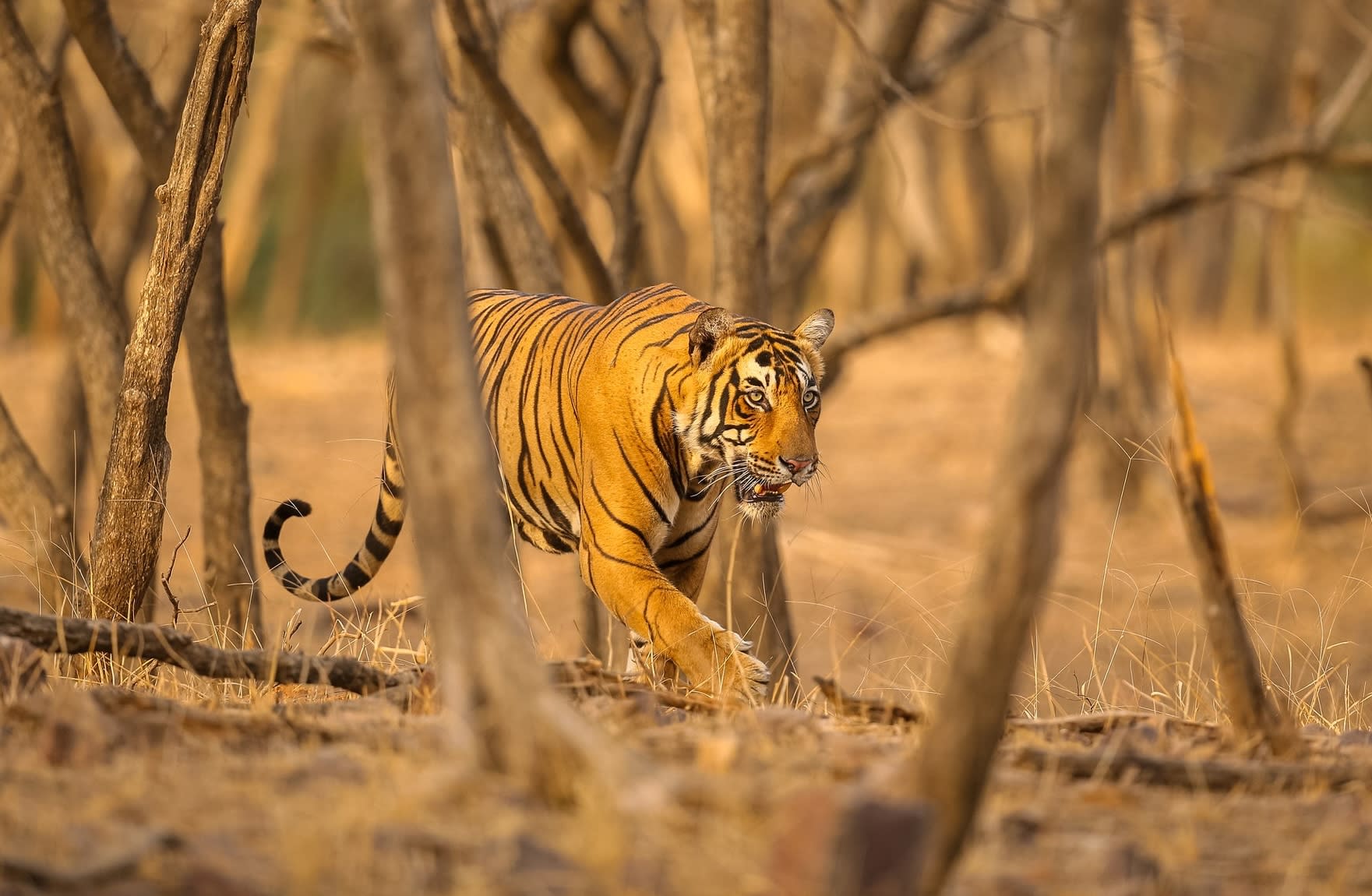
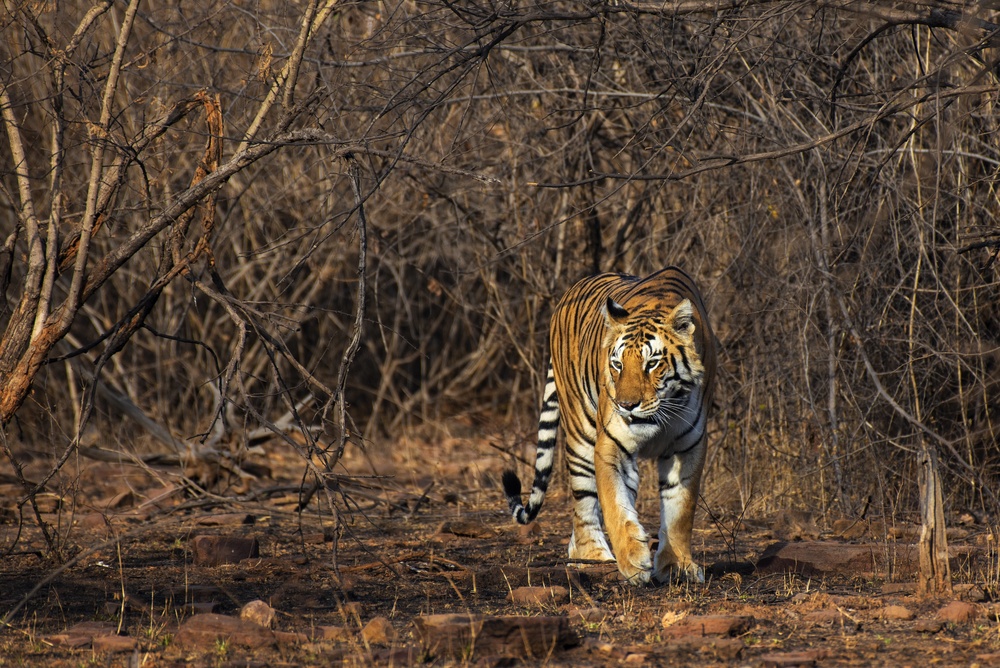
The best safaris feel different from the inside. A driver eases off the accelerator instead of racing the next jeep to a sighting. A guide cuts the engine and tips his head to listen - a langur is barking somewhere off to the left, a spotted deer picks up the call, and the whole forest seems to lean the same way. Nobody speaks. And into that quiet, because nothing is chasing it, a tiger steps out onto the track, unhurried, and is simply there. You do not earn that moment by pushing harder. You earn it by being the kind of visitor the forest can afford.
And widen your eye. The tiger is the headline, but the reserve is the whole cast - the langur's alarm call that tells you a cat is on the move, the dhole and the sloth bear, the gaur, the hundreds of birds, the forest itself. Read all of it, and a morning without a tiger is still a morning well spent.
If you visit
- Season
- Core zones across central India usually run about 1 October to 30 June and close for the monsoon; buffers often stay open year-round, and Corbett and Kaziranga keep their own calendars. Confirm the specific park's current dates before booking anything.
- How to book
- Only through the state forest department's official .gov.in portal, or a reputable lodge that books a genuine permit in your name. Never a lookalike site, and never a "guaranteed" tiger.
- Best for a first sighting
- Bandhavgarh, Tadoba and Ranthambore are the parks most often recommended for the best odds; Kanha and Pench for a fuller forest experience. None of them is a promise.
- Good to know
- April to June gives the best chance of a sighting, in punishing heat; October to March is green and comfortable but harder. Buffer safaris are legitimate, often quieter, and send money where conservation needs it.
The tiger, when it comes, is a gift - a slow shape resolving out of the grass, closer and larger than you expected, and then gone. It is worth every cold early morning. But it was never the whole point, and it was never yours to demand. Read the reserve well, and you will see it for what it is: not a zoo with the luck turned up, but a wild, working forest that let you in for a few careful hours.